Ever scribbled on a mug with the wrong marker and watched the design scratch off after one wash?
I’ve seen it happen, and it hurts. Paint markers fix that problem, but only if you pick the right type and use it the right way.
Here’s what you need to know.
1. Water-Based Markers: The Easygoing All-Rounder

Water-based paint markers work on a wide variety of surfaces. They’re the flexible, friendly option for most beginners.
The difference is simple. Water-based markers dilute their pigment in water, while oil-based markers dissolve their pigment in oil.
Here’s the catch: pigments don’t all last equally long. Always check the lightfastness, which tells you how well a color resists fading.
2. Shake, Squeeze, Draw: Your Step-by-Step Setup

Using a paint marker takes about a minute to learn. Follow these steps:
- Prep your surface. Standard paper works, and so do flat materials like glass, polished hardwood, ceramic, steel, and PVC pipes.
- Shake the marker well. This mixes the paint inside.
- Uncap it and press the tip until the paint starts to flow.
- Sketch your framework or pattern with even lines.
Skip step three and you’ll get a dry, streaky start. IMO, that’s the most common beginner mistake.
3. Oil-Based Markers: The “Won’t Budge” Option

Oil-based paint markers are permanent. Moisture, shrinking, and scratching won’t ruin your work, so you can stop worrying about damage.
Artists use them for:
- Stone painting
- Pottery
- Metals
- Synthetic materials
People also call them permanent paint markers. Their colors resist removal far better than water-based ones, especially on metal and rock designs.
4. Why Artists Keep Reaching for Them

Paint markers suit doodling, writing, and painting because the paint cures quickly. The colors come out brilliant and don’t fade with age.
Point sizes vary in millimeters, so you can pick a fine tip for detail or a broad one for coverage. Some markers even have double tips that you can switch between for different effects.
Tip shape matters too. On huge canvases and graffiti pieces, the right point creates entirely different artistic effects.
5. How to Pick the Right Marker for Your Project
Two factors drive your choice: what you plan to do and what surface you plan to mark. Start there before you look at brands.
Markers also differ by the colors and surfaces where they perform best. Two examples:
- High-gloss work: Bold, dense paints create delicate sheen and sparkly accents.
- Textiles: The best fabric markers give a bright, tactile texture and use fade-resistant colors. They look great on pastels, light colors, and lightweight fabrics like white cotton.
6. So, What Exactly Is a Paint Marker?

The name says it all: a paint marker writes with paint. Surfaces react very well to them.
They work perfectly for drawing and signing on plastic, latex, wood, and hard materials like rocks.
People use them in all sorts of ways. They keep kids busy during school breaks, and they spruce up everyday household items.
Plenty of people now prefer them over traditional acrylic painting with a brush and canvas. Honestly, I get it. No brushes to wash. 😉
Our Recommended Paint Markers:

- WORLD’S BEST SELLING PAINT MARKER – This 24-count Posca marker set was meticulously and thoughtfully designed and manufa…

- Rich, Opaque Color – POSCA’s high-quality water-based pigment delivers smooth, consistent color with rich, opaque covera…

- 【Oil Based Paint Markers】These graffiti markers are waterproof after dry. You don’t need to bake or seal after finishing…

- Vivid and Bold: Create standout artwork with markers that pop on light and dark surfaces

- BRUSH + FINE DUAL TIP: Switch easily between detailed lines and expressive strokes with a 1 mm fine tip and a flexible 1…
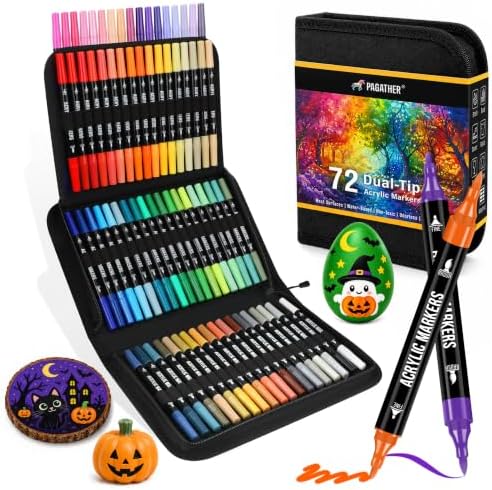
- 【Versatile Dual-Tip Design】: Unleash your creativity with our acrylic markers featuring a unique dual-tip design. The ex…

- DUAL TIP FOR PRECISE & CREATIVE WORK: Each acrylic paint marker features a 1 mm fine tip for detailed lines, writing, an…
The Bottom Line
Here’s the quick recap:
- Paint markers write in paint and work on plastic, wood, rocks, glass, and more.
- Water-based markers offer flexibility, but check lightfastness.
- Oil-based markers give you permanence on stone, metal, and pottery.
- Match the marker to your project and surface.
- Shake, press the tip, and draw even lines.
So yeah, if you’ve been sleeping on paint markers, now’s the time to wake up and give them a shot. Trust me, you’ll thank yourself later. 🙂
What’s the first thing you’d decorate? Tell me in the comments!
